
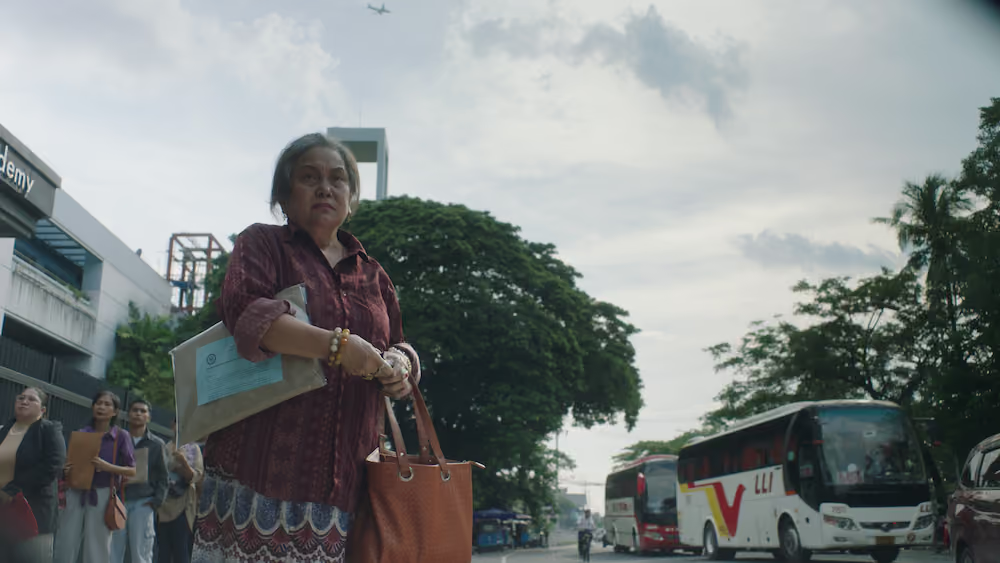

THE FILIPINO DIASPORA is often discussed through distance. There's the distance between the Philippines and the countries where Filipinos work, the distance between parents and children and the emotional distance that grows inside families separated by economic necessity. When our family members take a jab at a different country, it is often because of the sociopolitical turmoil our own motherland has to endure. Beneath this geography of separation, how do people remain connected when physical presence is no longer enough?
Martin Buber’s Dialogical Philosophy provides an illuminating framework for this question. In I and Thou (1923), Buber distinguishes between the I-It relationship, in which another person is treated as an object, function, or means to an end, and the I-Thou relationship, in which two people encounter one another as complete human beings through presence, reciprocity, and genuine recognition. This is the thesis of Status: Rejected: beneath its story of visas, America, social media, and migration lies a profound meditation on what happens when people desperately seek to be seen by others in a world that reduces them to categories.
At the center of the film is Virginia (Ruby Ruiz), also known as Biring, an aging Filipina whose repeated attempts to secure a U.S. visa have become intertwined with her idea of what a better life might look like. Biring goes into yet another embassy interview (for the fourth time), as she fixates on being in America and the frustrations that accompany it.
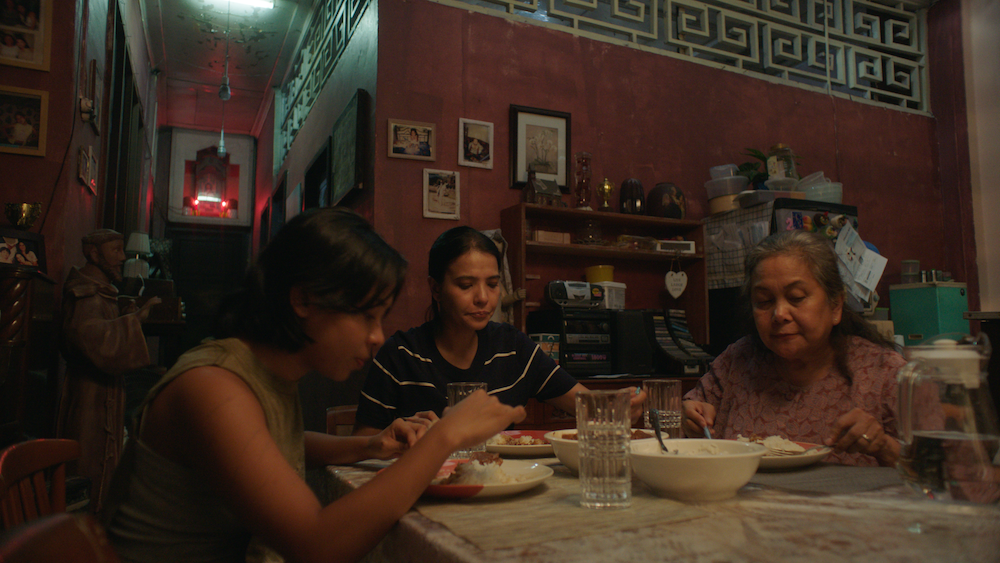
At home, Biring faces a very different reality. Her daughter Anna (Alessandra de Rossi) shoulders much of the family’s financial responsibilities, being the breadwinner. Her granddaughter Sophia (Yani Villarosa) provides all the assistance she can as Biring attempts to navigate the digital world—social media, emailing, use of computers and printers, and so on. Her son Clark (Karl Medina), working as a TNT in the U.S., is invisible throughout the film, for we only get to hear his voice through phone conversations, such as when Clark seeks help from his sister or when Biring asks Clark to help her secure her visa. As she learns how to use social media, Biring stumbles upon an online encounter with an individual from the U.S. named Steve. Steve presents himself as a lonely man seeking a woman who can accompany him in his times of melancholia.
Her closest companion Tessie (Beverly Salviejo) encourages her to secure her so-called "fiancée visa," and then some. Between immigration barriers, financial hardship, generational misunderstandings, and the anxieties of growing older, Biring finds herself caught between the life immediately in front of her and the life she continues to believe exists somewhere beyond the horizon.
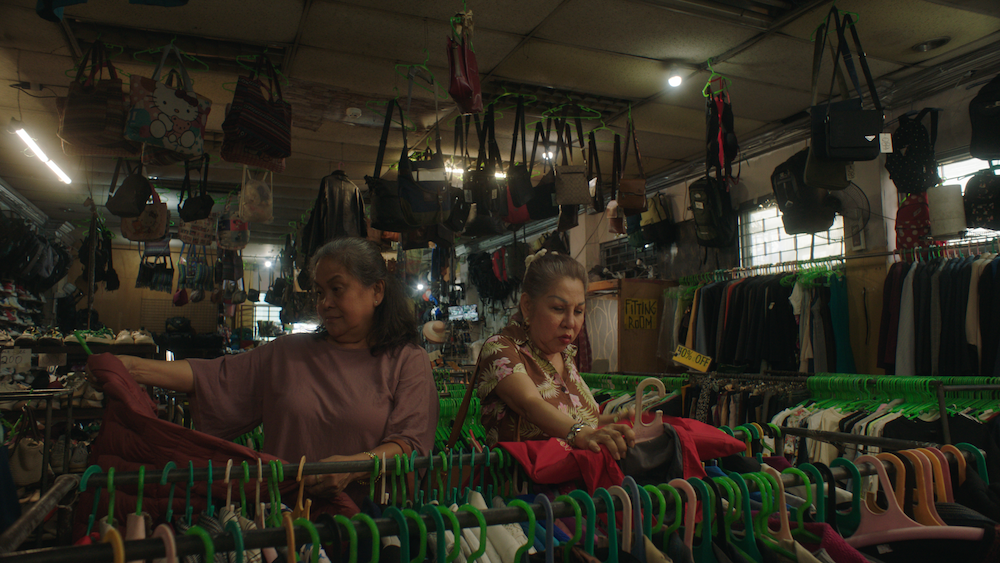
The film does not need to explicitly announce that Biring inhabits an I-It world because nearly every structure surrounding her demonstrates it. The embassy sees her as an applicant. When she attempts to get a job, the recruiter sees her through her age and qualifications. The American Dream becomes an object of desire. Even social media transforms people into photographs, profiles, messages, and statistics. Biring exists in a world where human beings deal with a constancy of categorization, based on what one can provide, afford, accomplish, or become. Buber’s distinction becomes the film’s philosophical foundation. The I-It world is necessary for navigating reality. But when it becomes the only way people relate to one another, something fundamentally human begins to disappear.
And then you have Biring's family members. The people closest to her are physically present. Yet because money, responsibility, work, food, and expectations often dominate Biring's conversations with Anna, Clark, and Sophia, she feels far removed from them. So they disagree. Often. And these disagreements are but consequences of people who have been forced to think of one another through their respective functions. Anna becomes the provider. Biring becomes the aging mother who wants to leave. Clark becomes the beloved son trying to maintain a life in the U.S., while Sophia becomes the granddaughter caught between generations. These identities are not false, but they are incomplete. Buber’s I-Thou philosophy asks us to see the person beyond the role. The story understands how difficult that becomes when economic survival demands that people behave according to those roles.
Social media appears to offer Biring something that her immediate environment struggles to provide—attention without judgment. She can momentarily step outside the identity of mother, grandmother, aging woman, or visa applicant by being onscreen for the most part and simply become someone worthy of another person's interest. The film does not ridicule this desire. It treats it with a tenderness—the type often played out in rom-coms, only notably with much younger characters. Biring is not foolish for wanting connection. She is human, after all. Her vulnerability comes from the fact that she is searching for an organic encounter in a medium that can easily turn intimacy into a transaction. The distinction between an I-Thou relationship and an I-It relationship becomes increasingly difficult to recognize. The latter can convincingly imitate the former.
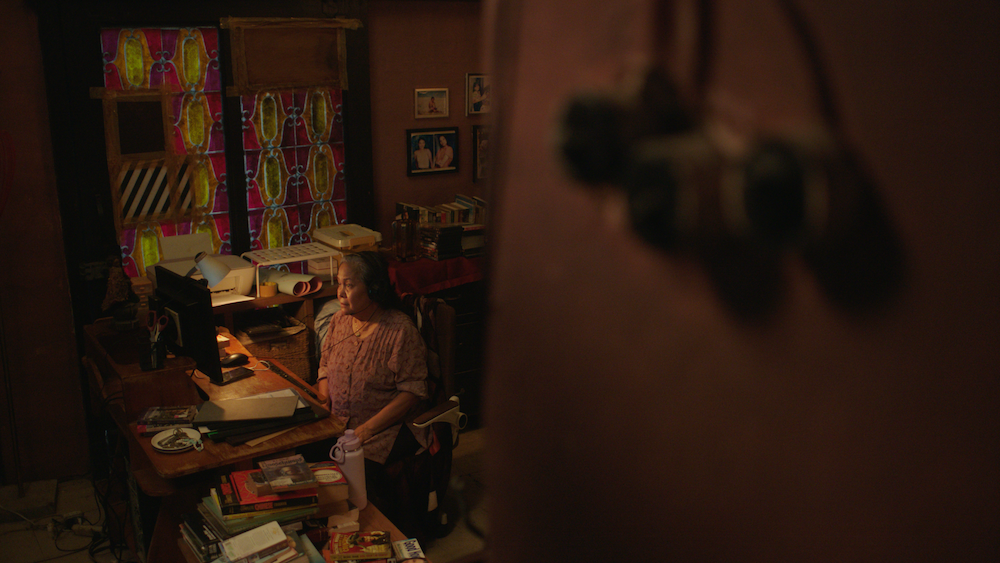
The digital screen—whether represented through the computer or the smartphone—connects people across enormous distances while preserving their physical separation. Biring can see another person without actually sharing a space with them; she can communicate without necessarily being understood. The glow of the screen against her face suggests the possibility of companionship, yet it also emphasizes her solitude. The film understands the paradox of contemporary communication: we have more ways of reaching one another than ever before, but connection does not automatically lead to encounters. The screen can transmit words, photographs, and images. It cannot guarantee presence. In this sense, the film's digital spaces become modern manifestations of Buber's warning that information about another person is not the same as truly meeting them.
America itself functions as another form of I-It relationship. Biring's conception of the United States is less a relationship with an actual place and more an idealized object onto which she projects her hopes. America becomes opportunity, escape, and validation. Perhaps even emotional salvation. The snowy imagery and artificial visual representations of the country capture the distance between the America Biring imagines and the complicated reality that exists beyond that fantasy. Beyond trying to cross a geographical border, she is also trying to cross into an imagined version of herself. Yet the film creates a poignant contradiction: the more Biring treats America as the answer to her problems, the more she allows an external institution, destination, or ideal to determine her value.
The film further complicates this idea through its treatment of migration across generations. Biring's understanding of America comes from one historical experience, while her children's relationship with migration is shaped by another. For one generation, America can represent possibility; for another, it can represent sacrifice, instability, or survival. The American Dream becomes a generational inheritance, passed down alongside the expectations attached to it. The family remains connected by the same dream, even when each member experiences it differently.
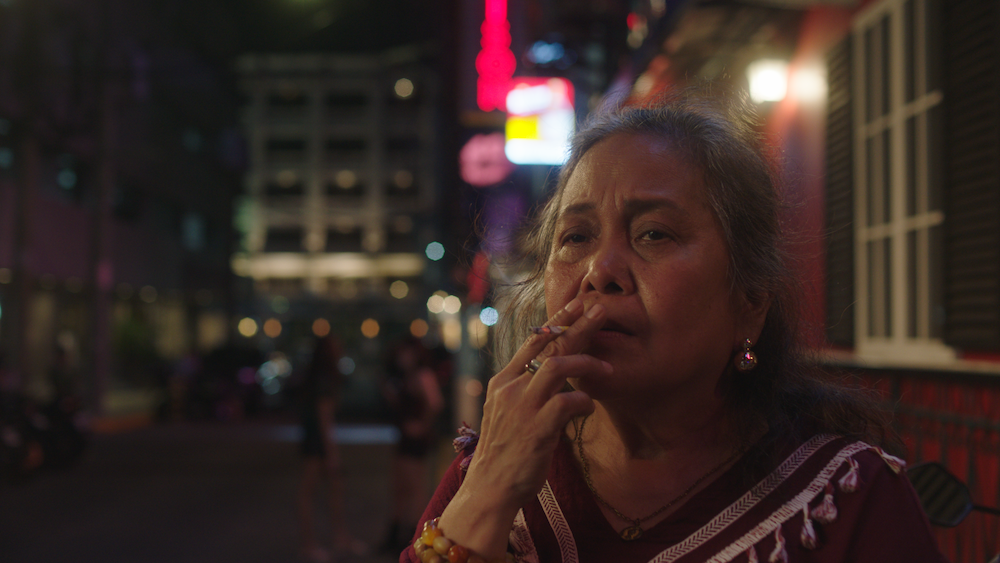
Anna and Tessie's characters consequently become essential to the film's philosophical argument. Anna's frustration with Biring is presented as more than cruelty, just as Biring's fixation on leaving is more than selfishness. Likewise, Tessie's frustration with Biring is never presented as merely self-serving, in the same way Biring's jealousy toward Tessie and Steve cannot be dismissed as mere betrayal. All women are carrying different versions of exhaustion. Anna is concerned with the immediate realities of keeping a household functioning. So she smokes her heart out in neon-filled Poblacion. Biring remains emotionally invested in the possibility that life can still become something else. So she grows in desperation to be with Steve by the day. Tessie worries about her future without her best friend, as she is to be left alone in the country without a genuine companion. So she sings Hudas Ka by Mae Rivera with such conviction. These conflicts culminate in the entrenched poisons of colonialism and corruption that the Philippines carries in its back. With the systems that we currently have in place—lack of employment opportunities for people of certain ages, people of academic distinctions, the overreliance on migration as a means of success, and the scarcity of social spaces for people of certain ages—the Thou becomes unappreciated even in its existence.
Status: Rejected's most profound moment comes at a pivotal scene with Anna and Biring, dialogue removed after having argued to death about their struggles within their household. The spaces between each character become definitive of the larger revelations thrown in perfect cohesion by the story. Each look matters. Each pause matters. Each gesture matters. Two people—Anna and Biring—occupy the same frame without knowing how to speak to one another. Think Nora Aunor and Vilma Santos in Ishmael Bernal's Ikaw ay Akin. Language becomes insufficient. Emotions fill all spaces. Buber's concept of Begegnung—or encounter—is translated into cinematic rather than purely verbal language. The camera allows faces, bodies, silences, and physical proximity to communicate what the characters cannot articulate. The result is a film that understands that sometimes the most significant conversation happens when nobody is speaking.
This sensitivity reaches its fullest expression in the film's treatment of reconciliation and recognition. Without dwelling on the circumstances that lead them there, Biring reaches a realization that the connection she has been searching for does not necessarily require geographical departure. The people around her have always had the capacity to become Thou, but only if they are willing to look beyond the roles they have assigned each other and the systems that have shaped them. We see the rigid identities begin to soften. A mother can become more than a burden. A daughter can become more than a provider. An elderly woman can become more than someone waiting for a visa. The person emerges from behind the category.
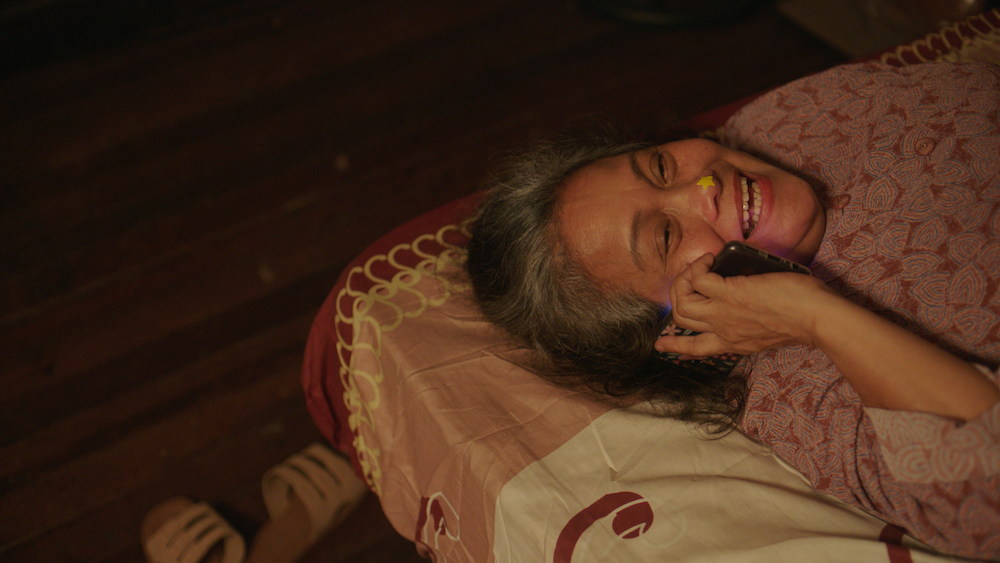
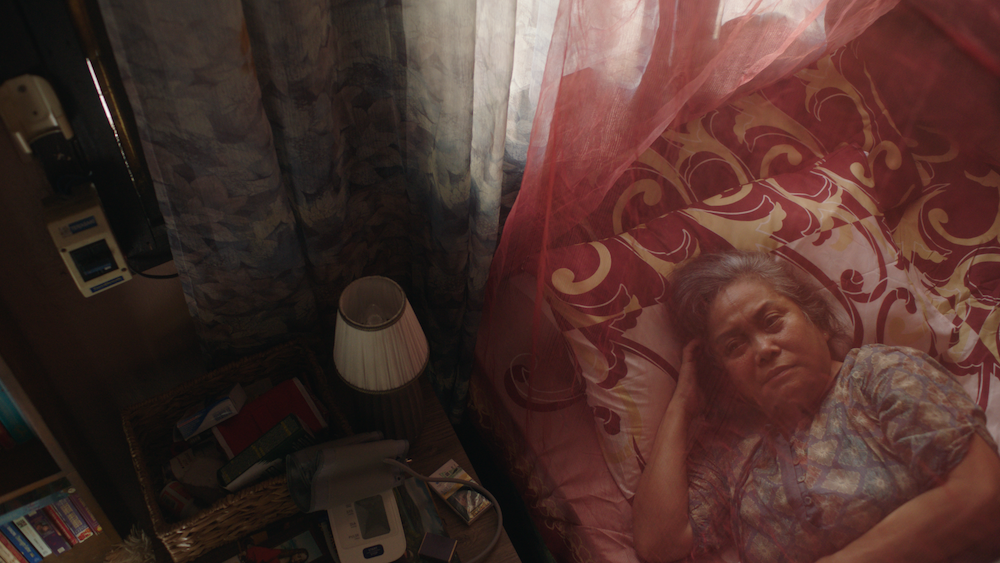
In Status: Rejected, rejection metamorphoses into a condition of existence. ©Cinemalaya
Admittedly, the film's storyline is not entirely new. Filipino cinema has long explored migration, the American Dream, fractured families, economic desperation, and the vulnerabilities of Filipinos attempting to build lives elsewhere. The film's broad narrative ingredients therefore belong to a familiar cinematic tradition. But Status: Rejected does not need to reinvent these materials to make them meaningful. Its accomplishment lies in the philosophical framework through which it examines them. The film takes a recognizable story about an aging Filipina's desire to reach America and transforms it into an inquiry about human recognition. The originality is less in the destination of the story than in the questions it asks along the way.
Status: Rejected is a deeply compassionate film about the difference between being seen and being encountered. Its immigration anxieties, family conflicts, digital relationships, generational tensions, and dreams of America all converge upon Buber's central question: what happens when we stop treating one another as objects and finally meet as human beings? Biring spends much of the film searching for recognition through institutions, destinations, and mediated relationships, only for the film to gradually redirect her attention toward the people already within her orbit. The film does not offer a simplistic solution to migration, poverty, aging, or family conflict. Instead, it offers something more intimate: the possibility that genuine encounters can exist even within an imperfect life. In Status: Rejected, rejection metamorphoses into a condition of existence—and its insistence that no person should ever be reduced to mere immigration status is a triumph.
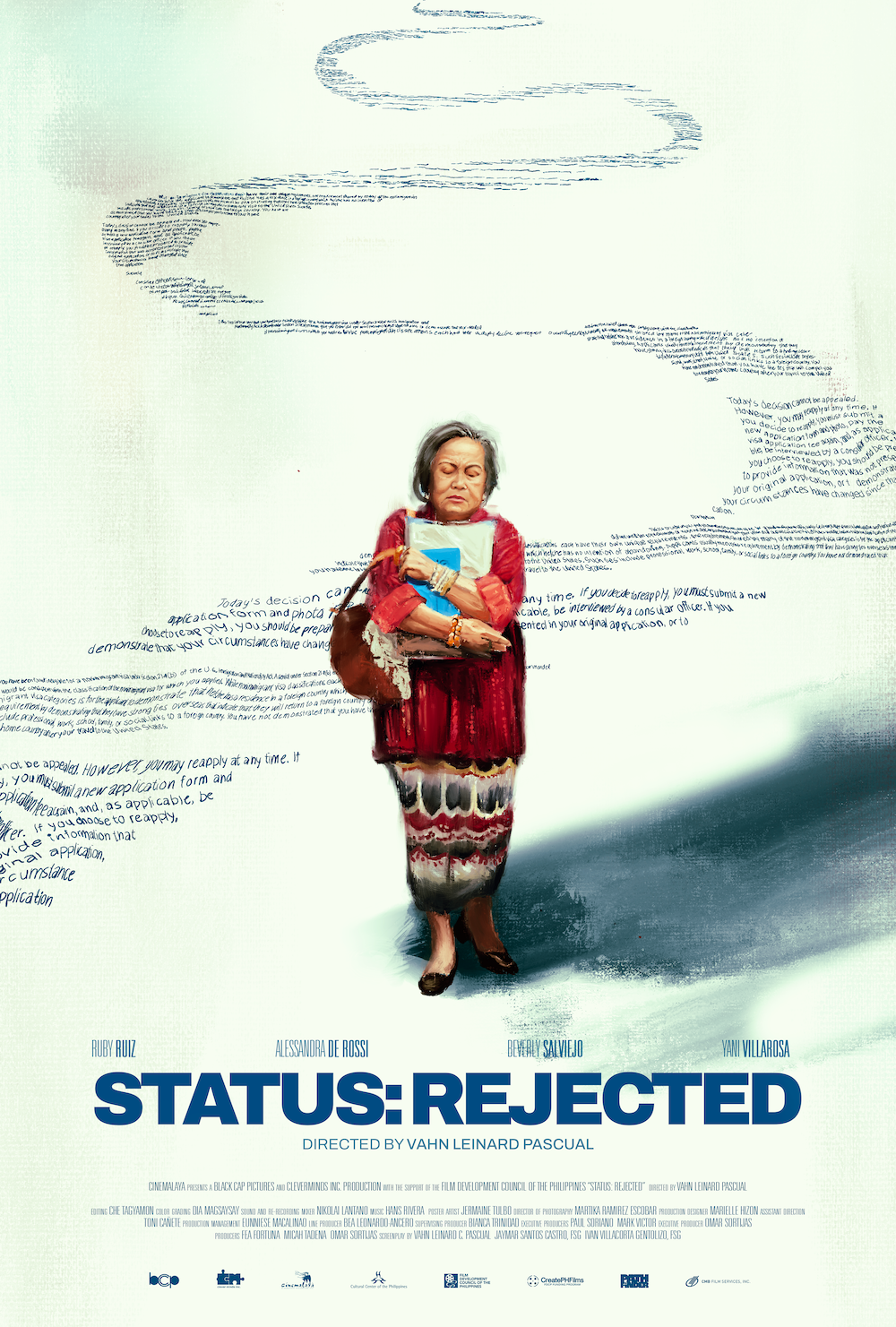
2 Valid IDs
dir. Vahn Leinard C. Pascual | 2026 | Drama, Comedy | 4
Longing for love and the promise of a better life, a grandmother finds herself swept into an unexpected online romance that challenges her sense of worth, family, and the dreams she refuses to let go of.
Official trailer for Vahn Leinard Pascual's Status: Rejected. ©Cinemalaya