
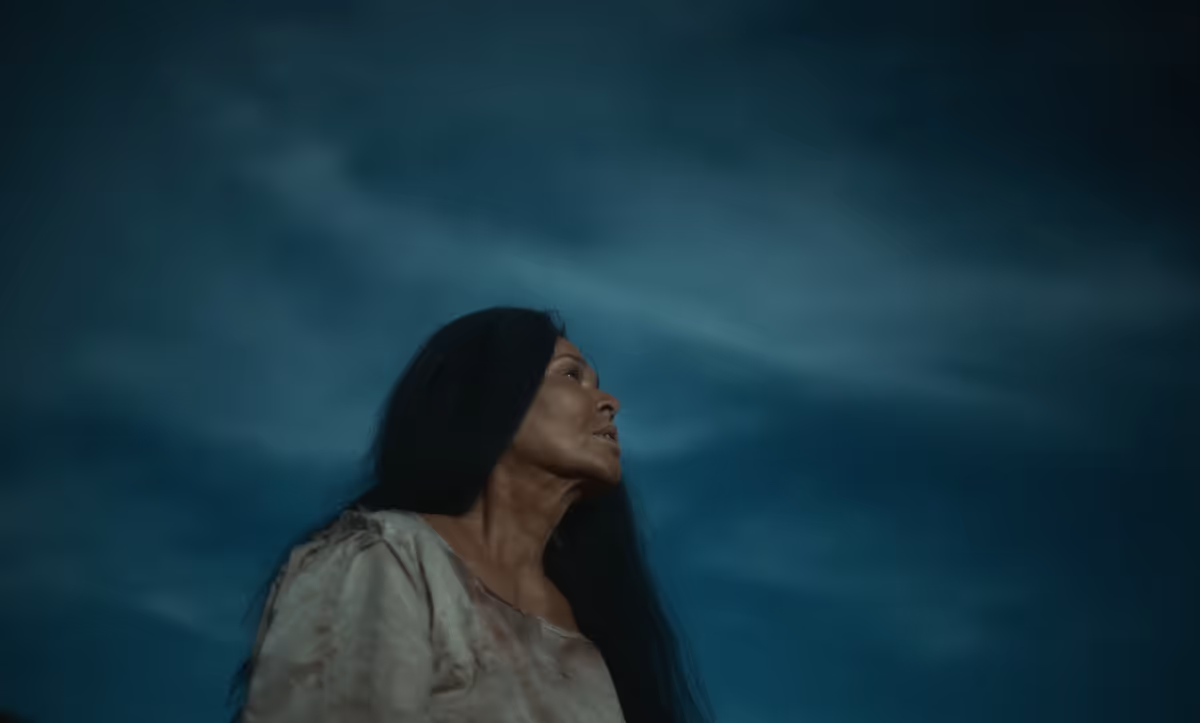
FROM THE FIRST FEW MOMENTS of Sisa, we understand that we’re treading outside of Jose Rizal’s pages. The ‘baliw’ we’re seeing on screen is neither defenseless nor downtrodden; she is cunning and duplicitous, and she will throw dirt in a colonizer’s eye. In fact, in the film, director Jun Robles Lana likes to frame her like a painter would any mythic subject: outsized and hyperimposed, a rumble of clouds whirring behind her. Lana’s pitch is a film where women aren’t reduced to mere symbols for the violence that occurs around them, and he posits that the best place to start with is Rizal’s most tragic character.
Unreel is partially reader-funded. Readers can directly support independent film writing & criticism for as little as $1/mo.
For the most part, Lana makes good on that promise. He has made a fine film about a tightly knit, if imperfect, community of women who carry the weight of their choices, including that of living in their own barrios as glorified prisoners. His film lines up quite nicely with Lav Diaz’s Magellan (and—so I’ve been told, for I have yet to see the film—Jerrold Tarog’s Quezon). But this film isn’t just reimagining history; it’s sampling a piece of fiction. And the characters in Lana’s Sisa are fully aware of Rizal’s Sisa, not only through reading the hero’s text but also for enduring the same tragedies during America’s “benevolent” imperialism as reconcentrados.
Chief among these women are Delia, a headstrong matriarch played by Eugene Domingo; Leonor (Jennica Garcia), a young widow who is outcast for being a sympathizing mistress to an American general; and Opel (Tanya Gomez), an elder whose husband was arrested for colluding with revolutionaries. Then, there’s Sisa, a revolutionary and former zarzuela actress who infiltrates the reconcentration camp as a grieving mother that was driven insane by the war—an injurious ‘baliw’ woman.
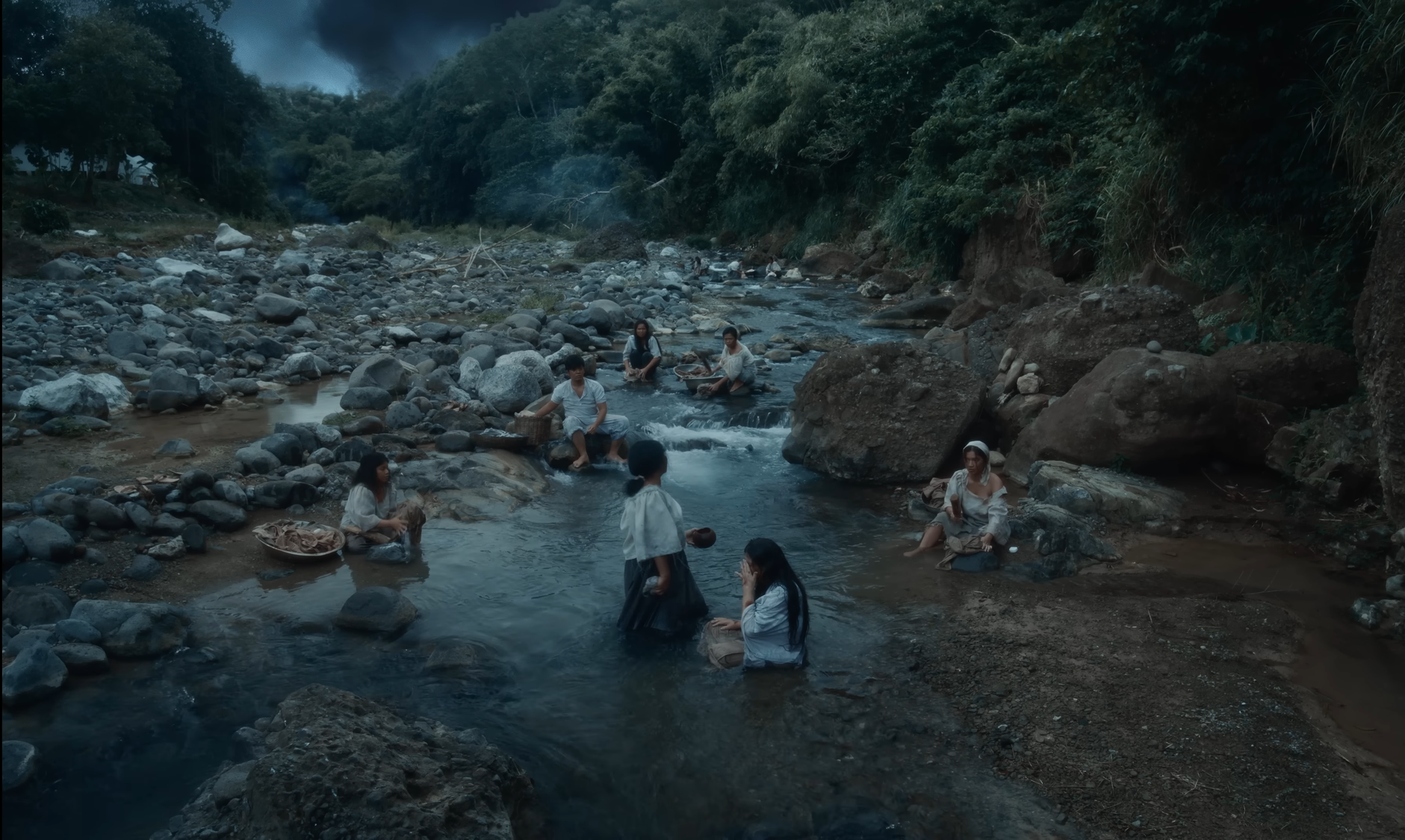
As ever, Hilda Koronel exudes a magnetic, almost disarming presence, playing the titular role. She gives Sisa such a disquieting quality, which Lana’s collaborators triple underscore with exacting skill: Terra Barrazo’s fiendish score gives auditory oomph to her excursions; Carlo Mendoza’s arresting visuals frame her, the camera slowly pushing in like she's this enchantress, a babaylan (seemingly a callback to Lino Brocka's Insiang); and Lawrence Ang’s skillful editing puts her as a woman in total control. Seeing all of these flourishes interplay, it’s clear that Sisa is Lana’s technically greatest film so far.
Yet, though enough time has passed since I’ve watched it in theaters—thankfully to a packed crowd, it’s amazing to see such involved patronage in local cinemas—I get this nagging feeling that won’t go away. Leonor’s cruel defiling feels not only displaced, its inclusion in the story feels wholly unnecessary. There’s no tiptoeing around the fact that Leonor’s grueling experience is nothing more than a plot device to drive Lana’s larger messages. And I can see her standing in for Filipinos who are blinded strictly by bribery and rage (*ahem*), but should we accept such misuse at the cost of seeing more senseless violence against women? Call it age, but I feel like there have to be fates for women characters other than in total ruin.
Sisa’s ending might pale compared to Lana’s typically pitch-perfect closers. The type of film it becomes demands a much bigger release. It leaves you with a deeply frustrating feeling, and to which extent it is deliberate and to which extent it is Lana’s own genuine disillusionment with his kababayans are both tough to say. What changed since Marilou (also played by Eugene Domingo) held that fiery gaze at the end of Mga Kwentong Barbero? I’m keen on keeping that glare sharp and open, but I certainly hope there are other options besides guaranteed immolation.

Sisa
dir. Jun Robles Lana | 2026 | Drama, Thriller | 3.5
The Philippines, 1902. The land is raw, wounded, occupied. Smoke clings to the trees. Blood soaks the soil. The war is over – but the violence lingers. Widows fill the villages. Mothers vanish into silence. Among them walks Sisa, barefoot and broken, dismissed as mad by those who fear what they don’t understand. But madness is only the surface.
Official traler for Sisa (2026, dir. Jun Robles Lana) ©IdeaFirst Company